
Raw Material Price Increases for Tungsten Powder and Tungsten Carbide
Introduction: Why Tungsten Price Trends in 2026 Matter
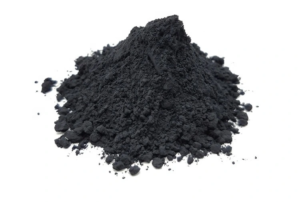
Tungsten Powder
Price increases for tungsten powder and tungsten carbide have accelerated significantly over the past six to twelve months. Many companies in the tooling and mechanical engineering industries, as well as in carbide production and safety-critical sectors, are already experiencing a noticeable rise in raw material costs.
At the same time, pressure is increasing on procurement and supply chain management, as sourcing strategic metals is becoming more complex. The current tungsten price trend in 2026 highlights how geopolitical decisions, technological demand, and structural market characteristics interact.
For procurement professionals, this means understanding price movements early and better anticipating supply chain risks. This article outlines the key market factors of recent months, explains political and regulatory influences, and highlights strategic options companies should now consider.
Current Market Overview
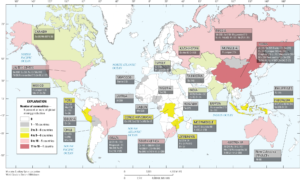
Critical minerals world map, Source: USGS
Recent tungsten price developments in 2026 show a clear trend of rising prices combined with increasing volatility. Market analyses indicate that tungsten has experienced several short-term price spikes over the past year. These fluctuations reflect the structural sensitivity of a relatively small raw materials market.
Compared to other industrial metals, the global tungsten market is relatively small, valued in the low billions (USD). At the same time, production is highly concentrated. This combination of limited market size and strong supply concentration means that even moderate changes in supply or demand can trigger significant price movements.
On the demand side, carbide production remains the main driver. Industries such as automotive supply, aerospace, and high-tech sectors rely heavily on tungsten for wear-resistant materials, precision components, and electronic applications. In addition, defense and security-related industries are increasing their demand for strategic metals, adding further pressure to global supply chains.
Causes of Price Increases

Carbide wear part
A key reason for rising prices of tungsten powder and tungsten carbide is the strong geographical concentration of mining and processing. Tungsten production is not widely distributed globally; instead, a few countries and producers dominate the market. As a result, changes in production levels, export policies, or national industrial strategies can have immediate global price impacts.
Political measures also play a major role. In recent months, export controls and regulatory interventions in key producing regions have partially restricted global supply. Since alternative supply chains are limited and many buyers maintain low inventory levels, such measures often lead to short-term price spikes.
At the same time, technological developments are reshaping demand. Industries such as electric mobility, artificial intelligence, and high-performance electronics increasingly require strategic metals with specialized material properties. Tungsten is one of these critical raw materials due to its extreme hardness and heat resistance. Even moderate demand growth from these sectors can significantly influence prices.
Market behavior also contributes to volatility. When governments, producers, or large industrial players build strategic stockpiles, the available supply decreases in the short term. Additionally, speculative movements in commodity markets often amplify existing shortages and lead to further price fluctuations.
Political and Regulatory Factors
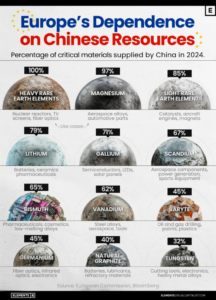
Critical Materials, Source: chinausfocus.com
Political and regulatory frameworks are among the most important drivers of tungsten price trends in 2026. Export restrictions by individual countries can quickly reduce global availability. When tungsten exports become restricted or require approval, uncertainty for importers increases immediately.
At the same time, strategic raw materials are gaining political attention. The European Union, Switzerland, and the United States are intensifying efforts to secure access to critical materials. These include:
- Promoting recycling programs
- Diversifying import sources
- Investing in alternative mining projects outside traditional regions
Trade policy risks also play a role. Changes in tariffs, sanctions, or international trade agreements can increase costs and extend delivery times. For procurement teams, this means incorporating political developments more actively into pricing and supply planning.
Impact on Procurement and Production
Rising raw material prices directly affect cost structures across many industries. Companies producing carbide tools, cutting materials, or high-performance components face significantly higher material costs. If these costs cannot be fully passed on to customers, profit margins come under pressure.
Beyond cost increases, operational risks in the supply chain are also growing. Shortages of tungsten powder or tungsten carbide can delay production or even cause temporary disruptions—especially in just-in-time manufacturing environments.
At the same time, bargaining power within the supply chain is shifting. Suppliers with secure access to raw materials are gaining influence, while smaller companies with limited alternatives face stricter pricing and delivery conditions.
Strategische Ansätze für KMU’s
In this environment, a strategic approach to raw materials is becoming increasingly important. Many companies are exploring ways to diversify their supplier base and reduce dependence on specific regions.
This includes:
- Sourcing from alternative producers outside dominant countries
- Collaborating with recycling providers
- Engaging with new mining projects
Long-term contracts are equally important. Framework agreements can secure volumes and improve price stability. Contracts with price adjustment clauses or index-based mechanisms help mitigate extreme market fluctuations.
Inventory and forecasting management are also gaining importance. Companies are increasing safety stock levels for critical materials and investing more in demand planning to better handle short-term market changes.
In addition, some companies are exploring technical solutions, such as:
- Improving material efficiency
- Partially substituting tungsten where technically feasible
- Expanding recycling programs
Secondary raw materials, in particular, can contribute to long-term cost stabilization and reduce dependence on primary sources.
Finally, continuous monitoring of political developments is essential. Changes in export regulations or raw material strategies can quickly impact availability and pricing. A structured early warning system enables procurement teams to respond proactively.
Data, Visualization and Sources
Various types of visualization can support the analysis of tungsten price trends in 2026. A line chart illustrating price developments over the past six to twelve months clearly highlights recent market dynamics. In addition, market shares by country of origin can be presented using a bar chart to illustrate the high concentration of production. An infographic of the global supply chain can further help to identify potential bottleneck regions and critical dependencies.
Typical sources of information include publicly available market price tables, industry analyses, specialized articles on export controls, and forecasts from raw materials and industrial research.
Conclusion and Recommendations
The current tungsten price trend in 2026 clearly demonstrates how sensitive the market for strategic metals is to political decisions, structural supply factors, and technological demand. For companies, this means that procurement strategies must be more diversified and supply chain risks more actively managed.
In the short term, securing supply volumes remains the primary focus for many buyers. Long-term contracts, increased safety stock levels, and a broader supplier base can help mitigate price fluctuations and supply shortages. In the medium to long term, investments in recycling, material efficiency, and strategic partnerships are becoming increasingly important in order to reduce dependence on individual sources of raw materials.
Political developments in key producing countries remain the most significant uncertainty factor. Companies that continuously monitor these developments and integrate them early into their procurement strategies will be better positioned to respond to future market changes.
| Region | Primary application | example materials |
|---|---|---|
| China | Production share, export controls, state regulation | Very high; direct impact on availability and pricing. |
| USA | Strategic stockpiling policies, demand from defense sector | Medium; demand can influence prices, but production is limited. |
| EU/Switzerland | Import dependency, political measures for resilience | High; dependency requires diversification and recycling strategies. |


